
The biggest mistake when buying a bathroom vanity isn’t choosing the wrong color—it’s falling in love with a style before grabbing a tape measure. That single misstep causes more delays and budget overruns than almost anything else during a bathroom renovation. With endless options for cabinet materials, sink styles, and storage layouts, decision fatigue is real. This bathroom vanity buying guide breaks the process into clear, professional steps so you can choose a vanity that fits your space, supports your daily routine, and holds up for years—not just the first photo.
This approach reflects how experienced renovation specialists like RJG Group help homeowners plan smarter, avoid rework, and protect their investment from day one.
Bathroom Vanity Buying Guide: Measure First, Design Second
No design decision matters if the vanity doesn’t physically fit your bathroom. Measurements aren’t just a formality—they’re the foundation of a smooth installation.
The Three Measurements You Cannot Skip
Before shopping, confirm these three numbers:
- Maximum Width
Measure the full side-to-side space, accounting for door trim, walls, and toilets. Even a half-inch error can make installation impossible. - Maximum Depth
Measure from the wall outward to ensure you can still walk comfortably and fully open doors and drawers. Depth mistakes are the most common cause of vanity returns. - Plumbing Height & Location
Measure from the floor to the center of the water supply lines and drain. Some vanities have solid backs or drawer banks that can clash with existing plumbing, leading to unexpected cabinet modifications or plumbing costs.
Professionals at RJG Group always confirm these details early, preventing last-minute surprises that derail renovation timelines.
Bathroom Vanity Buying Guide: Layout, Style, and Daily Use
Once your measurements are locked in, layout decisions should be driven by how the bathroom is actually used—not just how it looks online.
Bathroom Vanity Buying Guide: Freestanding vs Floating Vanities
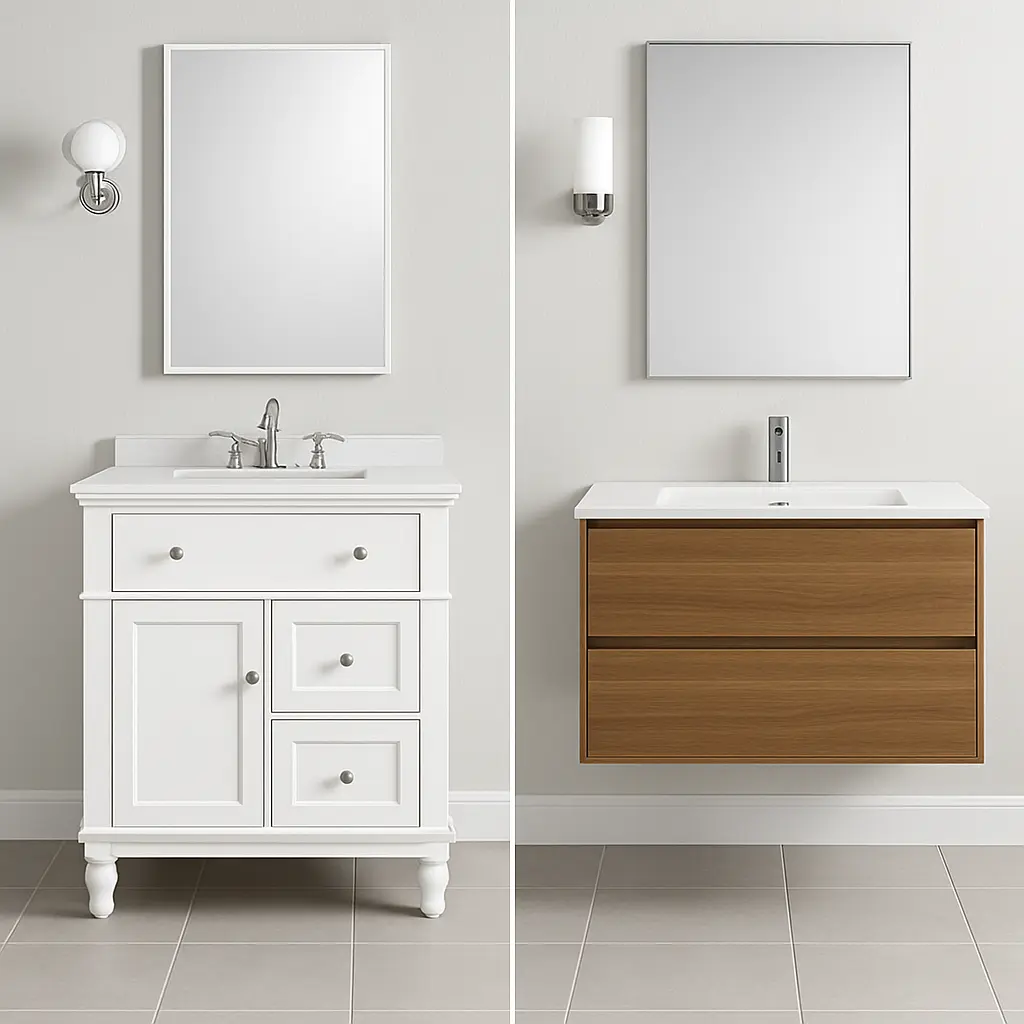
Freestanding vanities sit directly on the floor and offer the most storage. They’re forgiving to install and ideal for busy family bathrooms where towels, cleaning supplies, and toiletries need to disappear behind doors.
Floating (wall-mounted) vanities attach to wall framing and hover above the floor. They visually open up small bathrooms and make floor cleaning easier, but they require proper wall reinforcement and precise installation. This is an area where professional guidance—like that provided by RJG Group—protects both safety and finish quality.
Your choice should balance:
- Storage needs
- Installation complexity
- Long-term maintenance
Bathroom Vanity Buying Guide: Single vs Double Sink Planning
A double vanity sounds appealing—until space and plumbing realities set in. For a comfortable double-sink layout, you’ll need at least 60 inches of width. Anything less often feels cramped and sacrifices usable counter space.
Single-sink vanities shine in smaller bathrooms by offering:
- More uninterrupted countertop
- Simpler plumbing
- Lower installation costs
If your existing bathroom has only one drain and supply set, adding a second sink means hiring a plumber—an important budget consideration that experienced renovation teams plan for upfront.
Bathroom Vanity Buying Guide: Materials, Surfaces, and Hardware
A vanity’s durability depends less on its style and more on what it’s made of—and how it’s finished.
Bathroom Vanity Buying Guide: Countertop Materials That Survive Real Life
Bathrooms are harsh environments. Heat, humidity, cosmetics, and cleaners all take a toll.
- Quartz
Non-porous, stain-resistant, and low maintenance. Ideal for busy households and long-term durability. - Marble
Visually striking but porous. Requires sealing and careful cleaning to avoid staining and etching. - Laminate
Affordable and easy to clean, but vulnerable to water damage over time.
Many builders aligned with standards similar to those promoted by the Master Builders Association recommend quartz for its balance of performance and longevity—especially in full bathrooms.
Sink and Faucet Compatibility
Undermount sinks offer clean lines and easy maintenance, letting you wipe spills straight into the basin. Vessel sinks make a bold design statement but require taller faucets and can increase splashing.
Always match your faucet to the pre-drilled holes in the countertop:
- Centerset: holes close together
- Widespread: holes spaced farther apart
This detail alone can save time, returns, and frustration.
Final Checklist Before You Buy
Before clicking “add to cart” or approving a showroom order, confirm:
- Measured width, depth, and plumbing location
- Freestanding or floating installation
- Single or double sink layout
- Countertop material choice
- Faucet hole configuration
Installation typically ranges from $200–$500 depending on plumbing complexity. RJG Group advises homeowners to factor this in early so the total project cost stays predictable.
One final professional tip: open the drawers and doors. Smooth movement, solid weight, and soft-close hardware signal quality construction—details you’ll appreciate every single day.
Ready to Renovate With Confidence?
Choosing the right vanity isn’t about trends—it’s about fit, function, and long-term performance. If you want expert guidance from planning through installation, contact us at RJG Group.

We’ll help you select a vanity that works beautifully now and continues to perform for years to come.